
Europe
(176)
Italy
(59)
France
(21)
Germany
(21)
United Kingdom
(20)
Spain
(17)
Austria
(8)
Czech Republic
(6)
Greece
(6)
Switzerland
(4)
Finland
(3)
Netherlands
(3)
Portugal
(3)
Belgium
(2)
Malta
(2)
Slovakia
(2)
Albania
(1)
Bulgaria
(1)
Croatia
(1)
Cyprus
(1)
Denmark
(1)
Hungary
(1)
Ireland
(1)
Norway
(1)
Poland
(1)
Romania
(1)
Slovenia
(1)
Sweden
(1)
    Array
(
    [0] => Array
        (
            [name] => India
            [category] => Array
                (
                    [name] => Country
                )

            [parent] => Array
                (
                    [name] => Asia
                )

        )

)


Great Cities of Northern India - Delhi, Varanasi, Jodhpur, Jaipur & Agra
13 or 14
days
from
£7,080
Book today with a deposit from
£1,062
18th November 2026 - 1st December 2026, 24th November 2027 - 6th December 2027
Tour highlights
- Northern India from the Vedas to the Mughals, told through eight UNESCO World Heritage Sites.
- Varanasi from the river: at dusk for the evening aarti, and again at sunrise.
- The Taj Mahal at first light, and Fatehpur Sikri, Akbar’s capital abandoned after 15 years.
- Dinner in the garden of Mehrangarh Fort, and three nights in a 19th-century haveli in old Jaipur.
- Led by Dr Giles Tillotson or Dr Isabella Nardi, both formerly of Jaipur’s City Palace.
The river plains of the Ganges and the Yamuna have long been a corridor for migration and invasion, and each new power left its mark in stone. This tour follows them, then turns west into the princely lands of Rajasthan, tracing some 3,000 years of Indian history through five of the Subcontinent’s great cities. Delhi opens and closes the journey. Between lie Varanasi, the most sacred city in India; Jodhpur and Jaipur, Rajput capitals guarded by forts on rock and ridge; and Agra, heart of the Mughal Empire. Eight sites on the route are UNESCO World Heritage Sites.
Hindu tradition holds that Shiva himself founded Varanasi, and it claims to be the oldest continuously inhabited city in the world. As Kashi, ‘the Luminous’, it was known to the Buddha, who preached his first sermon at nearby Sarnath. Pilgrims still come to wash away their sins in the Ganges, and we see the city from the water twice: at dusk, ending at Dasaswamedh Ghat for the evening aarti, and again at dawn.
In Rajasthan the Rajput rulers first resisted the Mughals, then became their allies: Akbar married a princess of Amber in 1562, and Rajput generals commanded Mughal armies. Their new wealth went into ever more elaborate palace apartments within their forebears’ fortifications – the mirrored chambers of Amber, the painted rooms of Mehrangarh at Jodhpur, which Kipling called ‘the work of angels, fairies and giants’.
Mughal architecture of the 16th and 17th centuries is often regarded as the summit of India’s artistic achievement. Akbar built in red sandstone, at Agra’s fort and his short-lived capital of Fatehpur Sikri. White marble arrives with the Tomb of I’timād-ud-Daulah and reaches its height in the Taj Mahal, a creation which hovers somewhere between architecture, jewellery and myth.
In Delhi, most new rulers built alongside their predecessors, leaving a palimpsest of power from the Qutb Minar, begun in the 1190s, to Lutyens’ New Delhi, whose Viceroy’s House became the seat of an independent India only 18 years after it was occupied.
Both lecturers have worked at Jaipur’s City Palace museum. Dr Giles Tillotson, its Consultant Director from 2011 to 2020, is a historian of Rajput and Mughal architecture whose books include Taj Mahal and Jaipur Nama. Dr Isabella Nardi is an art historian of northern Indian painting, which runs through the itinerary from Mehrangarh to the City Palace.
Itinerary
Rooms are available from 2.00pm on 17th November, allowing for early check-in today. Nothing is planned before a pre-lunch talk. Humayun’s striking tomb, with its high-arched façades set in a walled garden, is an important example of early Mughal architecture. First of two nights in Delhi.
The Jama Masjid, India’s largest mosque, dominates Old Delhi with its minarets and domes. Rickshaw through the labyrinthine streets near Chandni Chowk. After lunch, visit the severely beautiful 15th-century tombs of the Sayyid and Lodi dynasties which are located in the serene Lodi Gardens.
Fly mid-morning from Delhi to Varanasi (IndiGo). After lunch in the hotel, walk in the old town, visiting hidden shrines and experiencing the busy life along the river. The Dasaswamedh Ghat is named after the ancient ten horse sacrifice which took place here in mythical time; a boat ride along the Ganges ends here with the evening river blessing ceremony (Arti), a ritual going back to the Vedic Age. First of two nights in Varanasi.
Begin the day with a boat ride at sunrise, followed by breakfast and a morning walk through the alleys of the old city. Buddha preached his first sermon at Sarnath and the site remains an active Buddhist centre. The Dhamek stupa in the Deer Park marks the spot where the Buddha sat to preach. The museum houses the 3rd-century bc lion capital which has become the symbol of modern India since independence.
After an independent morning in Varanasi, fly back to Delhi (IndiGo) in the afternoon. Overnight in Delhi.
Fly to Jodhpur (IndiGo) in the morning. Presiding over the capital of one of the largest Rajput states in western Rajasthan is the magnificent Mehrangarh Fort. Described by Kipling as the ‘work of angels, fairies and giants’, it was built in 1459 and has some of the most imposing fortifications in the world. Private dinner in the fort’s garden. First of two nights in Jodhpur.
Created in resplendent white marble, Jaswant Thada is the large 19th-cent. memorial of Jaswant Singh II and cremation ground of the Marwar rulers. A second visit to Mehrangarh Fort examines the painting tradition of the Marwari Rajputs, with special admission to the gallery led by the curator. The buildings of the lively Old City are painted in a variety of blues, originally the colour denoting the homes of Brahmins.
Today is spent travelling by coach through the scenic Aravalli mountain range from Jodhpur to Jaipur, stopping for lunch en route. First of three nights in Jaipur.
The City Palace contains an unsurpassed collection of paintings and artefacts. The Jantar Mantar, the 1730s observatory is equipped with massive astronomical instruments that are astonishingly accurate. Some free time to visit the painting and gem markets for which Jaipur is famous.
Athwart a natural ridge, the magnificent yellow walls of the 18th-cent. Amber Fort conceal fine craftsmanship – mirrored chambers, latticed windows, carved alabaster. Located in a traditional townhouse, the Anokhi museum showcases the art and heritage of wood-block printing.
En route to Agra, visit Fatehpur Sikri, a new capital built by Akbar (1570) but abandoned after a mere 15 years. The palace complex consists of a series of courtyards and beautifully wrought red sandstone pavilions. First of two nights in Agra.
Rise early to visit the Taj Mahal in the first light of day. It was commissioned by Shah Jahan in memory of his third wife, Mumtaz Mahal, and completed in 1648. Return to the hotel for breakfast before visiting the magnificent Red Fort, built by Akbar and the best-preserved of the palaces built during his reign, and the Tomb of I’timād-ud-Daulah (c. 1628), an exquisite garden tomb and the first Mughal building clad in white marble inlaid with pietra dura. Independent afternoon.
Drive to Delhi via Akbar’s mausoleum at Sikandra, built on his death in 1605. Set in a traditional char-bagh, it has no central dome unlike other Mughal mausolea. After lunch, visit the Qutb Minar, site of the first Islamic city of Delhi, established in 1193 on the grounds of a defeated Rajput fort. The towering minaret and its mosque survive as testament to the might of the invaders. Overnight in Delhi.
Car transfers to Delhi airport can be arranged for your onward journey.
Rooms are available from 2.00pm on 23rd November, allowing for early check-in today. Nothing is planned before a pre-lunch talk. Humayun’s Tomb (1560s), with its high-arched façades set in a walled garden, is the great early monument of Mughal architecture and the model for the Taj Mahal. First of two nights in Delhi.
The Jama Masjid, built by Shah Jahan in the 1650s and one of India’s largest mosques, dominates Old Delhi. Take a rickshaw through the lanes around Chandni Chowk. After lunch, visit the severely beautiful 15th- and early 16th-century tombs of the Sayyid and Lodi dynasties in Lodi Gardens.
Fly mid-morning from Delhi to Varanasi (IndiGo). After lunch in the hotel, walk in the old town, visiting hidden shrines along the river. Dasaswamedh Ghat takes its name from the ten-horse sacrifice said to have been performed here by Brahma. A boat ride along the Ganges ends here with the evening aarti. First of two nights in Varanasi.
Return to the river for a boat ride at sunrise, followed by breakfast and a walk through the alleys of the old city. At Sarnath, still an active Buddhist centre, the Dhamek Stupa in the Deer Park traditionally marks where the Buddha preached his first sermon. The museum houses the Ashokan lion capital (third century bc), adopted as India’s national emblem in 1950.he symbol of modern India since independence.
Morning flights from Varanasi to Delhi and Delhi to Jodhpur (Air India), arriving in the afternoon. Mehrangarh Fort, begun in 1459, presides over the capital of Marwar, one of the largest Rajput states, from a sheer rock outcrop. Private dinner in the fort’s garden. First of two nights in Jodhpur.
Jaswant Thada (1899), in white marble, is the memorial to Maharaja Jaswant Singh II and the cremation ground of the rulers of Marwar. A second visit to Mehrangarh concentrates on the painting of the Marwari Rajputs. The houses of the lively Old City are washed in shades of blue, traditionally associated with Brahmin households.
A day by coach through the Aravalli hills, stopping for lunch en route. First of three nights in Jaipur.
The City Palace holds an unsurpassed collection of paintings, textiles and arms. Sawai Jai Singh II’s Jantar Mantar (1728–34) is equipped with massive astronomical instruments of astonishing accuracy. Free time to visit the painting and gem markets for which Jaipur is famous.
Set along a ridge, the honey-coloured walls of Amber Fort (late 16th and 17th centuries) conceal mirrored chambers, latticed windows and carved alabaster. In a restored townhouse, the Anokhi Museum of Hand Printing shows the art of wood-block printing.
En route to Agra, visit Fatehpur Sikri, the capital built by Akbar from 1571. Its palace complex is a sequence of courtyards and finely wrought red sandstone pavilions. First of two nights in Agra.
Rise early for the Taj Mahal in the first light of day. Shah Jahan commissioned it in memory of his wife Mumtaz Mahal, and it was completed in 1648. After breakfast, visit Agra’s Red Fort, rebuilt by Akbar from 1565 and given marble palaces by Shah Jahan. Then visit the Tomb of I’timād-ud-Daulah (1622–28), built by Nur Jahan for her father, which was the first Mughal building clad in white marble inlaid with pietra dura. Free afternoon.
Drive to Delhi via Akbar’s mausoleum at Sikandra, begun in his lifetime and completed by his son Jahangir in 1613. Set in a char-bagh garden, it has no central dome, unlike other Mughal mausolea. After lunch, visit the Qutb Minar and its mosque, the first Islamic city of Delhi, founded in 1193 on the site of a captured Rajput fort and built partly from the stones of its temples. One night in Delhi.
Car transfers to Delhi airport can be arranged for your onward journey.
Expert speakers
Dr Giles Tillotson
Fellow (and former Director) of the Royal Asiatic Society, Giles is currently Senior Vice President at DAG (a Delhi-based art gallery). He was earlier Consultant Director at the City Palace in Jaipur, and before that Reader in History of Art and Chair of Art & Archaeology at SOAS. His specialisms include the history and architecture of the Rajput courts of Rajasthan and of the Mughal cities of Delhi and Agra; Indian architecture in the period of British rule and after Independence and landscape painting in India. Books include Taj Mahal, Jaipur Nama: Tales from the Pink City, Mughal India, The Tradition of Indian Architecture, and the novel, Return to Bhanupur.

Dr Isabella Nardi
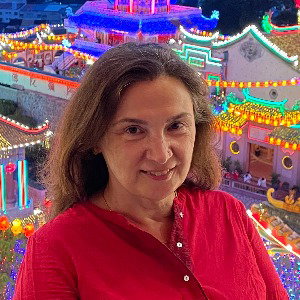
Art historian specialising in South Asia and Indology, in particular the painting traditions and visual cultures of northern India, from the early modern period to the present. She obtained her PhD in Indian Art History at SOAS and is best-known for her books The Theory of Citrasūtras (2006) and Portraits of Devotion (2019). She has worked at several institutions as a visiting professor and research fellow, including The Metropolitan Museum of Art, Sawai Man Singh II Museum in Jaipur, Jawaharlal Nehru University in New Delhi and the Università degli Studi di Napoli 'L’Orientale'.
Practicalities
In 2026: Two sharing: £7,080. Single occupancy: £8,760.
In 2027: Two sharing: £7,080. Single occupancy: £8,760.
Flights with IndiGo: Delhi to Varanasi, Varanasi to Delhi and Delhi to Jodhpur; travel by private air-conditioned coach; accommodation as described below; breakfasts, 11 lunches and 10 dinners with wine or beer, water and coffee; all admissions; all tips; the services of the lecturer, tour manager and local guides.
Flights from London to Delhi are not included in the price of the tour. We will send the recommended flight options when they come into range and ask that you make your own flight reservation.
The Imperial Hotel, New Delhi; 18–20 November 2026: 5-star hotel designed by F.B. Blomfield, a member of Lutyens’ team. The Claridges, New Delhi; 24-26 November 2027: a 5-star landmark hotel located in the heart of Lutyens’ Delhi. Taj Ganges Hotel, Varanasi: a comfortable 4-star hotel outside the city centre. Daspan House, Jodhpur: a small 4-star boutique hotel set in a former family home. Royal Heritage Haveli, Jaipur: a boutique hotel set in a converted 18th-century hunting lodge, with lawns and courtyard gardens, roughly a 30-minute drive from the city centre. Trident Hotel, Agra: comfortable, well-run, modern 4-star close to the main sites with a spacious garden. Roseate House Hotel, New Delhi; 22–23 November and 30 November–1 December: a 5-star hotel conveniently close to the airport.
Required for most foreign nationals, and not included in the tour price. We will advise all participants of the process.
This is a long and demanding tour so a good level of fitness is essential. Unless you enjoy entirely unimpaired mobility, cope with everyday walking and stair-climbing without difficulty and are reliably sure-footed, this tour is not for you.
You will be on your feet a lot, walking and standing around - sometimes on exposed sites in warm temperatures. Uneven ground and irregular paving are standard.
There are three days with long coach journeys of at least 150 miles where facilities are limited. There are some fairly steep ascents to forts and palaces. Steps to temples and palaces can also be steep and slippery. The unruly traffic and busy streets of Indian cities also require vigilance. Average distance by coach per day: 49 miles.
Between 10 and 23 participants.
Before booking, please refer to the FCDO website and Travel Health Pro to ensure you are happy with the travel advice for the destination(s) you are visiting.
Dates & prices
                GBP                Array
(
    [0] => Array
        (
            [id] => 01jz0sscq9k07g9bkpnkf0660r
            [published] => 1
            [start] => 2026-11-18 00:00:00
            [end] => 2026-12-01 00:00:00
            [range_type] => Fixed
            [version] => Array
                (
                    [id] => 01jz0byvv34qyqkp664mbfj1yr
                    [name] => 2026
                )

            [inventory] => Array
                (
                    [type] => Allocation
                    [capacity] => 11
                    [errata] =>
                )

            [categories] => Array
                (
                    [0] => Array
                        (
                            [name] => Dr Giles Tillotson
                            [description] =>
                        )

                )

            [fields] => Array
                (
                    [0] => Array
                        (
                            [__typename] => StringFieldData
                            [name] => tb_departure_setup_id
                            [string] => 28734
                        )

                    [1] => Array
                        (
                            [__typename] => StringFieldData
                            [name] => tb_link_speakers
                            [string] => [{"id":76215,"title":"Dr","forename":"Giles","surname":"Tillotson","type":"Lecturer"}]
                        )

                    [2] => Array
                        (
                            [__typename] => StringFieldData
                            [name] => tb_departure_code
                            [string] => MM232
                        )

                    [3] => Array
                        (
                            [__typename] => StringFieldData
                            [name] => onlinetalk_booking_link
                            [string] =>
                        )

                )

            [elements] => Array
                (
                    [0] => Array
                        (
                            [id] => 01jz0sscrrsh5t50637kvfg5jw
                            [element] => Array
                                (
                                    [id] => 01jz0ssca75y8jst7j581abz0p
                                    [category] => Array
                                        (
                                            [name] => Tour Space
                                        )

                                    [name] => Tour Space
                                    [published] => 1
                                    [is_package] => 1
                                )

                            [prices] => Array
                                (
                                    [0] => Array
                                        (
                                            [id] => 01jz0ssct12fwft6gh2cdnc3bs
                                            [currency] => GBP
                                            [value] => 7080
                                            [on_sale] => 1
                                            [previous_value] =>
                                            [deposit] =>
                                            [option] => Array
                                                (
                                                    [id] => 01jz0sscemnsca11mjrgwbn857
                                                    [name] => Tour Space
                                                    [category] => Array
                                                        (
                                                            [name] => Price
                                                        )

                                                    [constraints] =>
                                                    [web_bookable] => 1
                                                    [published] => 1
                                                )

                                        )

                                )

                        )

                    [1] => Array
                        (
                            [id] => 01jz0ssctcxyhdc0z8rw2pb3s7
                            [element] => Array
                                (
                                    [id] => 01jz0sscf5veang9r8k068wrk8
                                    [category] => Array
                                        (
                                            [name] => Flights
                                        )

                                    [name] => Flight
                                    [published] => 1
                                    [is_package] => 1
                                )

                            [prices] => Array
                                (
                                )

                        )

                )

        )

)
2026
Date
Speaker
Price
Date:
18th November - 1st December 2026
Speaker:
Dr Giles Tillotson
Price:
from £7,080
(Based on two sharing)
                GBP                Array
(
    [0] => Array
        (
            [id] => 01kjsss70azm7hkk8pbnpa65t6
            [published] => 1
            [start] => 2027-11-24 00:00:00
            [end] => 2027-12-06 00:00:00
            [range_type] => Fixed
            [version] => Array
                (
                    [id] => 01kjsqfagc2sptb893f1qzfzaz
                    [name] => 2027
                )

            [inventory] => Array
                (
                    [type] => Allocation
                    [capacity] => 19
                    [errata] =>
                )

            [categories] => Array
                (
                    [0] => Array
                        (
                            [name] => Dr Isabella Nardi
                            [description] =>
                        )

                )

            [fields] => Array
                (
                    [0] => Array
                        (
                            [__typename] => StringFieldData
                            [name] => tb_departure_setup_id
                            [string] => 29856
                        )

                    [1] => Array
                        (
                            [__typename] => StringFieldData
                            [name] => tb_link_speakers
                            [string] => [{"id":143746,"title":"Dr","forename":"Isabella","surname":"Nardi","type":"Lecturer"}]
                        )

                    [2] => Array
                        (
                            [__typename] => StringFieldData
                            [name] => tb_departure_code
                            [string] => MN552
                        )

                    [3] => Array
                        (
                            [__typename] => StringFieldData
                            [name] => onlinetalk_booking_link
                            [string] =>
                        )

                )

            [elements] => Array
                (
                    [0] => Array
                        (
                            [id] => 01kjsss716c9ffqkj5e41mb306
                            [element] => Array
                                (
                                    [id] => 01kjsss6qcbh7mkf6308secwvm
                                    [category] => Array
                                        (
                                            [name] => Tour Space
                                        )

                                    [name] => Tour Space
                                    [published] => 1
                                    [is_package] => 1
                                )

                            [prices] => Array
                                (
                                    [0] => Array
                                        (
                                            [id] => 01kjsss71ydsf2d77k39r9e5f0
                                            [currency] => GBP
                                            [value] => 7080
                                            [on_sale] => 1
                                            [previous_value] =>
                                            [deposit] =>
                                            [option] => Array
                                                (
                                                    [id] => 01kjsss6t1ffj2j8emc5ka1c7v
                                                    [name] => Tour Space
                                                    [category] => Array
                                                        (
                                                            [name] => Price
                                                        )

                                                    [constraints] =>
                                                    [web_bookable] => 1
                                                    [published] => 1
                                                )

                                        )

                                )

                        )

                    [1] => Array
                        (
                            [id] => 01kjsss72713kgqf97svtavqgr
                            [element] => Array
                                (
                                    [id] => 01kjsss6w6tbrktg7ahj2c2ksr
                                    [category] => Array
                                        (
                                            [name] => Flights
                                        )

                                    [name] => Flight
                                    [published] => 1
                                    [is_package] => 1
                                )

                            [prices] => Array
                                (
                                )

                        )

                )

        )

)
2027
Date
Speaker
Price
Date:
24th November - 6th December 2027
Speaker:
Dr Isabella Nardi
Price:
from £7,080
(Based on two sharing)Related tours and events


Sign up to our e-newsletter
e-newsletter recipients are the first to hear about our future plans and our tours as they come on sale. By signing up you agree to our Privacy policy.




My Wishlist
Please note that all saved tours will be removed if you clear your cookies.
Sign up to our e-newsletter
E-newsletter recipients are the first to hear about our future plans and our tours as they come on sale.